
Biomedical Waste Management in Nursing: Complete Guide
Biomedical Waste Management is a crucial aspect of healthcare that ensures safe handling, treatment, and disposal of waste generated during medical activities. Proper waste management helps prevent infections, protects healthcare workers, and reduces environmental hazards.
At Ideal Institute of Nursing, Kalyani, students are trained with practical and theoretical knowledge to manage biomedical waste effectively.
What is Biomedical Waste?
Biomedical waste refers to any waste generated during the diagnosis, treatment, or immunization of humans or animals, including research activities in healthcare.
Sources of Biomedical Waste
Biomedical waste is generated from various healthcare facilities such as:
Hospitals and nursing homes
Clinics and dispensaries
Diagnostic laboratories
Blood banks
Veterinary hospitals
Research institutions
👉 Learn more about healthcare education at
➡️ Ideal Institute of Nursing, Kalyani
Types of Biomedical Waste
Understanding different types of biomedical waste is essential for proper handling:
Infectious Waste – Contaminated with blood or body fluids
Pathological Waste – Human tissues and organs
Sharps – Needles, syringes, blades
Pharmaceutical Waste – Expired or unused medicines
Chemical Waste – Disinfectants and solvents
Radioactive Waste – Generated from radiotherapy
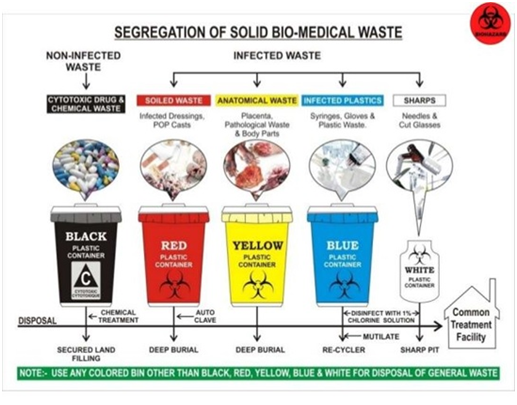
Biomedical Waste Color Coding System
Proper segregation is done using color-coded containers as per guidelines:
Yellow Bag – Human/animal anatomical and soiled waste
Red Bag – Contaminated plastic waste (IV sets, tubing)
White (Translucent) – Sharps like needles and scalpels
Blue Container – Glassware and broken vials
Steps in Biomedical Waste Management
The process includes the following essential steps:
Segregation – At the point of waste generation
Collection – Using color-coded bins
Storage – Safe temporary storage
Transportation – To treatment facility
Treatment – Disinfection or sterilization
Disposal – Final safe disposal
Methods of Biomedical Waste Treatment
Different treatment methods are used depending on the type of waste:
Incineration – High-temperature burning
Autoclaving – Steam sterilization
Microwaving – Disinfection using microwave energy
Chemical Treatment – Using disinfectants
Shredding – Reducing waste volume
Importance of Biomedical Waste Management
Effective biomedical waste management is essential because it:
Prevents the spread of infections
Protects healthcare workers and patients
Reduces environmental pollution
Ensures community safety
Role of Nurses in Biomedical Waste Management
Nurses play a vital role in maintaining proper waste management practices:
Proper segregation of waste
Use of Personal Protective Equipment (PPE)
Safe handling of sharps
Educating patients and staff
Reporting injuries and accidents
Conclusion
Biomedical waste management is a fundamental responsibility in healthcare. Proper handling, segregation, and disposal not only ensure infection control but also protect the environment and society.
Institutions like Ideal Institute of Nursing, Kalyani are committed to training future nurses with the skills required to manage biomedical waste safely and effectively.
🔗 INTERNAL LINKING (IMPORTANT FOR SEO)
Add these links within your website:
👉 Nursing Courses Page
https://iinkalyani.org/nursing-courses👉 Admission Page
https://iinkalyani.org/admission👉 About Us
https://iinkalyani.org/about-us
🌐 EXTERNAL LINKS (HIGH AUTHORITY)
Biomedical Waste Rules (India):
https://dhr.gov.inWHO Guidelines on Healthcare Waste:
https://www.who.int