
Nursing Responsibilities Regarding Mouth Care
Oral hygiene is one of the most important aspects of patient care in nursing practice. Proper mouth care helps maintain oral cleanliness, prevents infections, improves patient comfort, and promotes overall health. Nurses play a vital role in assessing oral conditions and providing appropriate mouth care to patients who are unable to maintain oral hygiene independently.
At Ideal Institute of Nursing, nursing students receive practical and theoretical training on patient hygiene procedures, including comprehensive mouth care techniques used in hospitals and healthcare settings.
This article explains the importance of mouth care, nursing responsibilities, procedures, precautions, and the significance of oral hygiene in patient recovery.
What is Mouth Care in Nursing?
Mouth care refers to maintaining oral hygiene by cleaning the mouth, teeth, gums, tongue, and lips to prevent infections and promote patient comfort.
Mouth care is especially important for:
- Bedridden patients
- Unconscious patients
- Elderly individuals
- Patients on oxygen therapy
- Post-operative patients
- Patients receiving chemotherapy
- Critically ill patients
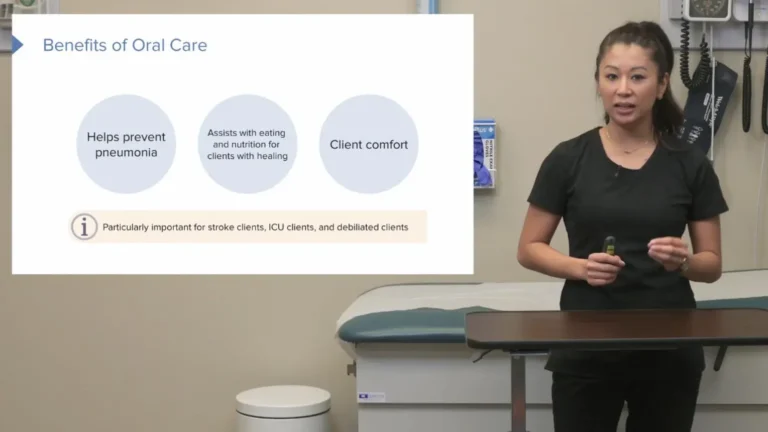
Good oral hygiene reduces bacterial growth and prevents complications such as mouth ulcers, bad breath, gum disease, and respiratory infections.
Importance of Mouth Care in Nursing
Proper mouth care is essential because it:
- Prevents oral infections
- Removes food debris and plaque
- Improves patient comfort
- Prevents dryness and bad breath
- Promotes appetite
- Reduces risk of aspiration pneumonia
- Enhances overall patient well-being
At Ideal Institute of Nursing, students are trained to understand the connection between oral hygiene and overall health.
Nursing Responsibilities Regarding Mouth Care
Nurses have several important responsibilities while providing mouth care to patients.
1. Assess the Patient’s Oral Condition
Before providing mouth care, nurses assess:
- Condition of teeth and gums
- Presence of ulcers or bleeding
- Dryness of mouth
- Foul smell
- Difficulty swallowing
- Presence of dentures
Assessment helps identify oral health problems early.
2. Maintain Infection Control
Nurses must follow proper infection control practices such as:
- Washing hands before and after procedure
- Wearing gloves
- Using clean equipment
- Proper disposal of waste materials
Maintaining hygiene prevents cross-contamination and infection.
3. Prepare Required Equipment
Common mouth care equipment includes:
- Toothbrush
- Toothpaste
- Mouthwash
- Kidney tray
- Cotton swabs
- Gauze pieces
- Disposable gloves
- Towel
- Lubricant for lips
Nursing students at Ideal Institute of Nursing receive practical training in preparing and handling patient care equipment safely.
4. Position the Patient Properly
The patient should be placed in a comfortable position, usually:
- Semi-Fowler’s position
- Side-lying position for unconscious patients
Correct positioning reduces the risk of aspiration.
5. Perform Oral Hygiene Procedure
The nurse gently cleans:
- Teeth
- Tongue
- Gums
- Inner cheeks
- Lips
For unconscious patients, extra care is taken to avoid choking or aspiration.
6. Provide Comfort and Emotional Support
Nurses should communicate politely and reassure the patient during the procedure.
Compassionate care improves patient satisfaction and cooperation.
7. Observe and Report Abnormalities
Nurses must report findings such as:
- Mouth ulcers
- Bleeding gums
- White patches
- Fungal infections
- Swelling
- Loose teeth
Early reporting helps in timely treatment.
8. Document the Procedure
After mouth care, nurses document:
- Oral assessment findings
- Procedure performed
- Patient response
- Any abnormalities observed
Accurate documentation is an essential nursing responsibility.
Mouth Care Procedure for Conscious Patients
The procedure generally includes:
- Explain the procedure to the patient
- Wash hands and wear gloves
- Position the patient comfortably
- Place towel around neck
- Brush teeth and clean tongue
- Rinse mouth properly
- Apply lip moisturizer if needed
- Dispose waste safely
- Wash hands and document findings
Mouth Care for Unconscious Patients
Unconscious patients require special attention because they cannot swallow properly.
Important precautions include:
- Turn patient to side position
- Use minimal liquid
- Use suction if necessary
- Avoid aspiration
- Clean mouth gently with swabs
Practical demonstrations at Ideal Institute of Nursing help students gain confidence in critical patient care procedures.
Benefits of Proper Mouth Care
Prevents Infection
Good oral hygiene reduces bacterial growth.
Enhances Comfort
Patients feel fresh and comfortable after mouth cleaning.
Improves Nutrition
Clean mouth improves appetite and eating ability.
Promotes Faster Recovery
Healthy oral condition supports overall healing.
Common Oral Problems Observed in Patients
Nurses may observe:
- Dry mouth
- Gingivitis
- Oral thrush
- Mouth ulcers
- Bleeding gums
- Cracked lips
- Bad breath
Early intervention prevents complications.
Role of Nursing Education in Patient Hygiene Care
Patient hygiene is a core component of nursing education. Proper training helps nursing students:
- Develop clinical skills
- Improve patient communication
- Learn infection control practices
- Build confidence in bedside nursing care
At Ideal Institute of Nursing, students receive hands-on clinical exposure to essential nursing procedures.
Why Choose Ideal Institute of Nursing?
Ideal Institute of Nursing is dedicated to preparing skilled and compassionate nursing professionals.
Key Features:
- Experienced faculty
- Modern nursing laboratories
- Clinical training exposure
- Practical-oriented learning
- Patient-centered education
The institute focuses on both academic excellence and professional healthcare skills.
Career Opportunities in Nursing
Nurses trained in patient hygiene and oral care procedures can work in:
- Hospitals
- Intensive Care Units (ICU)
- Elderly care centers
- Rehabilitation centers
- Community healthcare services
- Home healthcare agencies
Practical nursing skills improve employability and career growth.
Frequently Asked Questions (FAQs)
Why is mouth care important for patients?
Mouth care prevents infections, improves comfort, and supports overall health.
How often should mouth care be provided?
Usually twice daily or more frequently for critically ill patients.
What precautions are taken during mouth care for unconscious patients?
Side positioning, suction support, and minimal fluid use help prevent aspiration.
What are common oral problems seen in hospitalized patients?
Dry mouth, ulcers, fungal infections, and bleeding gums are common issues.
Conclusion
Mouth care is a fundamental nursing responsibility that directly affects patient comfort, infection prevention, and recovery. Nurses must provide proper oral hygiene care with compassion, safety, and professional knowledge.
At Ideal Institute of Nursing, nursing students are trained thoroughly in patient hygiene management and essential bedside care procedures to prepare them for successful healthcare careers.
Suggested SEO Keywords
- Nursing responsibilities regarding mouth care
- Mouth care procedure in nursing
- Oral hygiene nursing care
- Patient mouth care procedure
- Mouth care for unconscious patients
- Nursing practical training
- Ideal Institute of Nursing
- Nursing college in Kalyani
- Oral care nursing responsibilities
- Bedside nursing procedures