
Psychological Care After Burn Injury: A Complete Guide
A burn injury can change much more than a person’s skin. Along with pain, wound care, surgery and rehabilitation, a burn survivor may experience fear, anxiety, sadness, disturbed sleep, changes in body image and uncertainty about the future. For some patients, the emotional effects can continue long after the physical wounds have healed. This is why psychological care after burn injury is an important part of comprehensive burn management. Emotional recovery should begin alongside physical treatment and continue through rehabilitation and reintegration into family, education, work and community life.The World Health Organization recognizes that burn injuries can result in disability, disfigurement, stigma and emotional trauma. Rehabilitation therefore needs to address more than physical function and may include psychological and social support. For nursing students, understanding psychological care after a burn injury is particularly important because nurses often spend significant time with patients and families during hospitalization, wound care and rehabilitation.
What Is Psychological Care After Burn Injury?
Psychological care after burn injury refers to emotional, psychological and social support provided to a person following a burn.
The goal is not simply to make the patient feel better temporarily. Psychological care helps the patient understand and cope with the effects of the injury, participate in treatment, develop healthy coping strategies and gradually return to meaningful daily activities.
Depending on individual needs, psychological care may include:
-
Emotional support
-
Psychological first aid
-
Therapeutic communication
-
Counselling
-
Anxiety and stress management
-
Support for body-image concerns
-
Family counselling
-
Social support
-
Rehabilitation
-
Peer-support programmes
-
Referral to psychologists or psychiatrists when necessary
Psychological interventions should be provided by appropriately trained professionals, particularly when a patient has persistent or severe psychological symptoms. WHO notes that psychological interventions can be effective for conditions such as anxiety and depression when delivered by trained and supervised providers.
Why Is Psychological Care Important After a Burn?
Burn injuries can have physical, emotional and social consequences. Visible scars, changes in appearance, restricted movement, pain and prolonged hospitalization may affect how a person sees themselves and interacts with others.
A patient may worry:
-
“Will I look the same again?”
-
“Will people stare at me?”
-
“Can I return to school or work?”
-
“Will my family accept me?”
-
“Will the pain continue?”
-
“Will I be able to live independently?”
These concerns are understandable and should not be dismissed.
WHO notes that non-fatal burns can result in prolonged hospitalization, disfigurement, disability, stigma and rejection.
Early recognition of emotional distress allows healthcare professionals to provide appropriate support before problems become more severe.
Common Psychological Problems After Burn Injury
Every burn survivor responds differently. Some people adapt well, while others may experience significant psychological distress.
Anxiety
Patients may feel anxious about pain, dressing changes, surgery, future appearance or returning home.
Anxiety may appear as:
-
Restlessness
-
Excessive worry
-
Difficulty sleeping
-
Fear of procedures
-
Irritability
-
Difficulty concentrating
Depression
Some patients may experience persistent sadness, loss of interest, low motivation or hopelessness.
Depressive symptoms should be taken seriously, particularly when they interfere with eating, sleeping, rehabilitation or participation in daily life.
Post-Traumatic Stress Symptoms
A severe burn may be a traumatic experience. Some survivors can develop symptoms associated with post-traumatic stress, including unwanted memories, nightmares, avoidance, heightened alertness or distress when reminded of the incident.
Persistent or severe symptoms require assessment by an appropriate mental-health professional.
Body-Image Concerns
Scarring or changes in appearance can affect self-confidence and social interaction.
Patients may avoid mirrors, photographs, social gatherings or meeting unfamiliar people.
Body-image concerns can occur in both adults and children and may continue during the rehabilitation period.
Fear and Avoidance
A patient who has experienced a fire, electrical accident or scald may develop fear of returning to similar environments.
For example, a person injured while cooking may initially feel uncomfortable entering a kitchen again.
Social Isolation
Some burn survivors may withdraw because they are worried about how other people will react to their scars.
Social isolation can reduce confidence and make rehabilitation more difficult.
Psychological Care During Hospitalization
Psychological support should begin during the hospital stay rather than waiting until the patient is discharged.
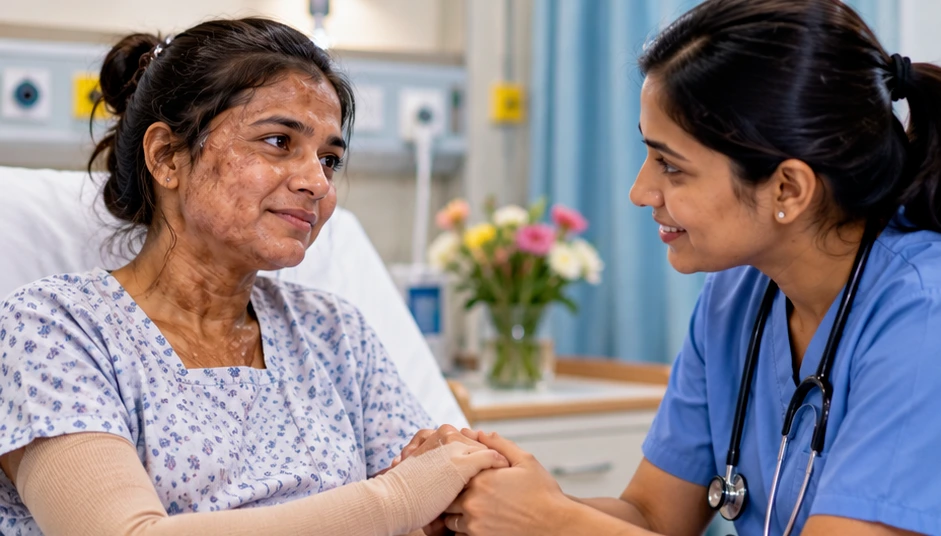
Create a Safe and Supportive Environment
Patients should feel that their concerns are being heard.
Nurses can introduce themselves, explain procedures clearly and allow patients to ask questions.
Use Therapeutic Communication
Communication should be honest, respectful and compassionate.
Instead of saying, “Don’t worry,” healthcare professionals can acknowledge the patient’s feelings and say something such as:
“It is understandable to feel worried after such an experience. The healthcare team is here to support you through your recovery.”
This type of communication validates the patient’s experience without giving unrealistic reassurance.
Explain Procedures Before They Happen
Unexpected procedures can increase anxiety.
Before wound dressing, physiotherapy or another procedure, nurses should explain what will happen and what the patient can expect.
Providing information can help patients feel more prepared and involved.
Encourage Patient Participation
Whenever medically appropriate, patients should participate in decisions concerning their daily care and rehabilitation.
A sense of control can help reduce feelings of helplessness.
Psychological First Aid
Psychological first aid involves providing humane, supportive and practical assistance to people experiencing acute distress.
WHO recommends psychological first aid as one approach for providing emotional and practical support during acute distress.
In a burn-care setting, supportive approaches may include:
-
Ensuring immediate safety.
-
Listening without forcing the patient to talk.
-
Identifying immediate needs.
-
Providing practical information.
-
Connecting the patient with family or support systems.
-
Identifying when specialist mental-health referral is required.
Psychological first aid does not mean diagnosing a mental-health disorder. It is a supportive approach intended to reduce immediate distress and promote safety and coping.
Managing Pain and Emotional Distress
Pain and psychological distress can influence each other.
Severe pain may increase anxiety, while anxiety can make pain feel more difficult to manage.
Pain management should therefore be part of comprehensive burn care. Nurses can monitor pain, administer prescribed medication, explain procedures and help patients use appropriate relaxation or coping techniques.
Patients should never be expected to simply tolerate severe pain without appropriate assessment and treatment.
Supporting Body Image and Self-Esteem
Body-image concerns can be one of the most difficult aspects of burn recovery.
A patient may initially struggle to accept scars or changes in appearance.
Healthcare professionals can help by:
-
Listening without judgement
-
Allowing the patient to express concerns
-
Avoiding insensitive comments
-
Supporting gradual adjustment
-
Encouraging appropriate rehabilitation
-
Connecting patients with psychological services
-
Introducing peer support when available
The aim is not to tell a patient to “ignore” their appearance. Instead, care should help the person develop confidence and adapt to changes while recognizing their individual experience.
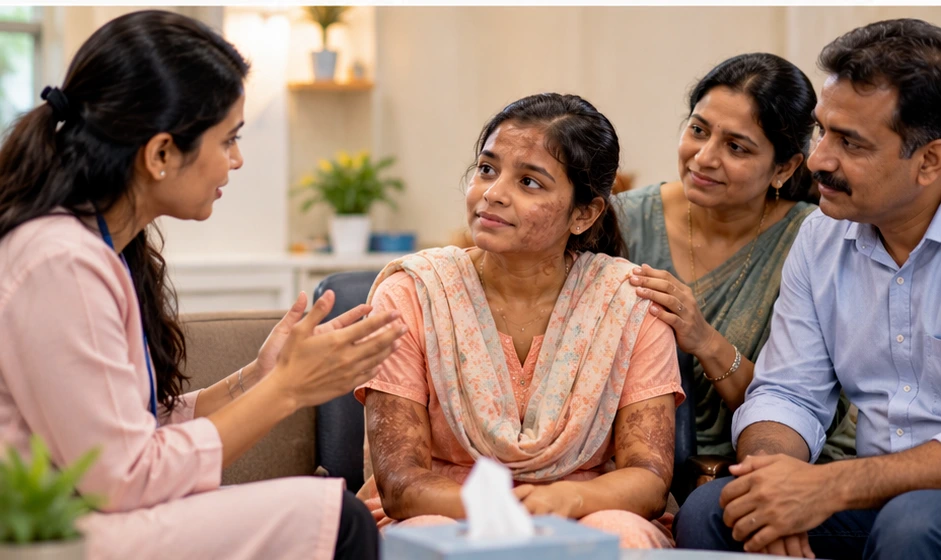
Family Support After Burn Injury
Families can have a powerful influence on recovery.
Family members may experience their own fear, guilt, sadness or uncertainty. They may also be unsure about how to support the patient.
Healthcare professionals can encourage families to:
-
Listen patiently
-
Avoid unnecessary criticism
-
Encourage participation in rehabilitation
-
Respect the patient’s feelings
-
Avoid making negative comments about appearance
-
Maintain normal family interaction when appropriate
-
Attend follow-up appointments
-
Seek professional support when needed
Family education is especially important for children recovering from burns.
Psychological Care for Children With Burn Injuries
Children may have difficulty understanding why their appearance or routine has changed.
They may also be afraid of medical procedures, dressing changes or returning to school.
Psychological support for children may include:
-
Age-appropriate explanations
-
Play-based communication
-
Family involvement
-
School reintegration support
-
Positive reinforcement
-
Psychological counselling when needed
-
Peer interaction
-
Support for body-image concerns
Parents should be encouraged to communicate openly with children without creating unnecessary fear.
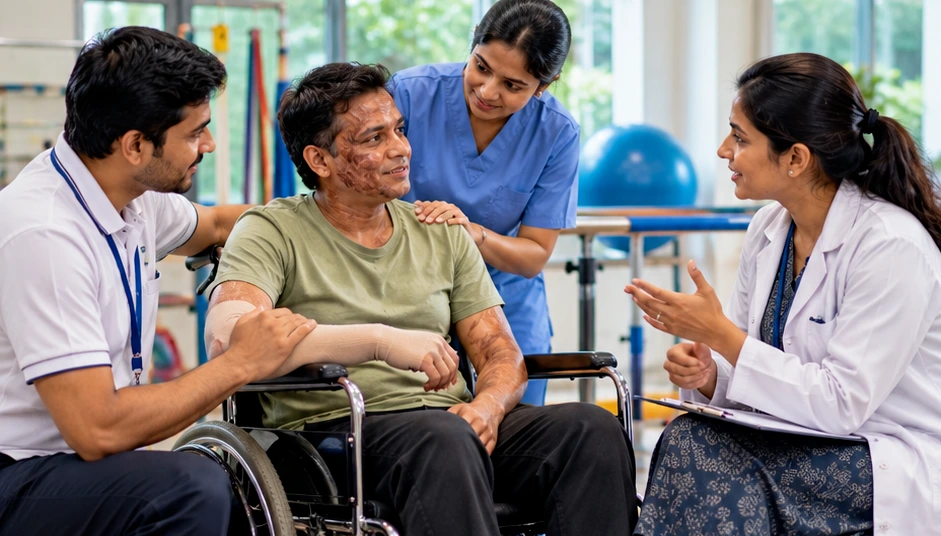
Rehabilitation and Psychological Recovery
Recovery from a burn is not complete when the wound closes.
Rehabilitation may continue for months or longer depending on the injury. It can involve physiotherapy, occupational therapy, scar management, reconstructive care, psychological support and social reintegration.
WHO describes rehabilitation as a person-centred process that aims to improve functioning, independence and participation in everyday life. It can include psychological therapies as well as physical and occupational rehabilitation.
For burn survivors, rehabilitation may help them gradually return to:
-
School
-
Employment
-
Family responsibilities
-
Social activities
-
Exercise
-
Community participation
Role of Counselling in Burn Recovery
Counselling gives patients a safe environment to discuss their feelings and concerns.
A trained professional may help the patient develop strategies for:
-
Managing anxiety
-
Coping with traumatic memories
-
Improving confidence
-
Managing body-image concerns
-
Dealing with social reactions
-
Improving communication
-
Returning to daily activities
Counselling should be individualized rather than following the same approach for every patient.
Peer Support and Support Groups
Meeting another burn survivor can sometimes help patients feel less alone.
Peer-support programmes can provide an opportunity to share experiences, coping strategies and practical information.
However, participation should always be voluntary. Patients should not be pressured to share personal experiences before they feel ready.
When Should a Burn Survivor Be Referred to a Mental-Health Professional?
Not every patient requires psychiatric treatment, but professional assessment is appropriate when emotional problems are persistent, severe or interfering with recovery.
Referral should be considered when there are signs such as:
-
Persistent sadness
-
Severe anxiety
-
Recurrent nightmares
-
Intrusive memories
-
Severe sleep disturbance
-
Social withdrawal
-
Loss of interest in normal activities
-
Difficulty participating in rehabilitation
-
Feelings of hopelessness
-
Thoughts of self-harm or suicide
Any expression of suicidal thoughts or immediate safety concerns requires urgent professional assessment and appropriate emergency support.
Nursing Responsibilities in Psychological Care After Burn Injury
Nurses are central to patient-centred burn care.
1. Assess Emotional Status
Nurses should observe the patient’s mood, behaviour, communication and response to treatment.
Changes in behaviour should be documented and communicated to the appropriate healthcare professional.
2. Provide Therapeutic Communication
A calm, respectful and non-judgmental approach can help establish trust.
3. Reduce Anxiety Before Procedures
Explaining wound care, dressing changes and other procedures can help patients feel more prepared.
4. Encourage Expression of Feelings
Patients should have opportunities to discuss fears, concerns and frustrations.
5. Promote Family Involvement
With the patient’s consent and according to clinical circumstances, family members can be involved in education and emotional support.
6. Support Rehabilitation
Nurses can encourage appropriate participation in physiotherapy, occupational therapy and other rehabilitation activities.
7. Monitor for Psychological Warning Signs
Nurses should remain alert for symptoms of depression, severe anxiety, trauma-related symptoms and other mental-health concerns.
8. Facilitate Referral
When specialist psychological or psychiatric support is required, nurses can help coordinate timely referral.
Benefits of Psychological Care After Burn Injury
Appropriate psychological care can support several aspects of recovery.
Potential benefits include:
-
Better coping with the trauma
-
Improved participation in rehabilitation
-
Reduced emotional distress
-
Better communication with healthcare providers
-
Improved confidence
-
Greater family involvement
-
Improved social reintegration
-
Better quality of life
Psychological care should be considered part of the overall rehabilitation process rather than an optional extra.
Aftercare and Long-Term Support
Emotional recovery can continue after hospital discharge.
Follow-up care may include:
-
Medical appointments
-
Scar management
-
Physiotherapy
-
Occupational therapy
-
Psychological counselling
-
Family support
-
Social rehabilitation
-
School or workplace reintegration
Some psychological concerns may appear later, particularly when the patient returns to normal social situations and becomes more aware of visible scars or changes in function.
For this reason, follow-up should consider both physical and psychological recovery.
Practical Coping Strategies for Burn Survivors
Under professional guidance, burn survivors may benefit from simple strategies such as:
-
Maintaining regular sleep routines
-
Staying connected with supportive people
-
Following the rehabilitation plan
-
Gradually returning to meaningful activities
-
Practising relaxation or breathing techniques
-
Discussing distress instead of keeping it hidden
-
Joining an appropriate support group
-
Seeking professional counselling when needed
These strategies are supportive measures and should not replace professional mental-health treatment when significant psychological symptoms are present.
Psychological Care and Nursing Education
For nursing students, psychological care after burn injury provides an excellent example of holistic nursing.
A burn patient needs more than wound care. Effective nursing practice considers physical symptoms, emotional responses, family relationships, social participation and long-term rehabilitation.
Students should understand:
-
Therapeutic communication
-
Psychological assessment
-
Anxiety and stress management
-
Body-image concerns
-
Family counselling
-
Pain and emotional distress
-
Rehabilitation
-
Mental-health referral
-
Patient education
-
Community reintegration
This knowledge helps future nurses provide compassionate care while recognizing when specialist psychological support is needed.
Ideal Institute of Nursing emphasizes clinical exposure and practical nursing education, making topics such as burn rehabilitation and psychological care particularly relevant to developing patient-centred nursing skills. The institute’s Nursing Foundation Lab provides hands-on training in clinical skills, including wound care and other foundational procedures.
Frequently Asked Questions
Why is psychological care important after a burn injury?
Psychological care helps patients cope with trauma, pain, changes in appearance, anxiety, social concerns and the challenges of rehabilitation. It is an important part of holistic burn recovery.
What psychological problems can occur after a burn?
Patients may experience anxiety, depression, trauma-related symptoms, sleep problems, body-image concerns, fear, social withdrawal and difficulty adjusting to changes caused by the injury.
Can burn injuries cause post-traumatic stress symptoms?
Yes. A serious burn can be a traumatic event, and some survivors may develop symptoms such as intrusive memories, nightmares, avoidance or heightened alertness. Persistent symptoms should be assessed by an appropriate mental-health professional.
How can nurses provide psychological care to burn patients?
Nurses can provide therapeutic communication, explain procedures, assess emotional status, encourage expression of feelings, support family involvement, promote rehabilitation and refer patients to mental-health professionals when needed.
How can family members support a burn survivor?
Family members can listen without judgement, encourage rehabilitation, avoid negative comments about appearance, maintain supportive communication and seek professional guidance when emotional problems become difficult to manage.
Does psychological care continue after discharge?
Yes. Psychological recovery can continue after physical wounds have healed. Follow-up may include counselling, rehabilitation, family support and assistance with returning to school, work and social activities.
When should a burn patient see a psychologist or psychiatrist?
Professional assessment should be considered when anxiety, depression, trauma-related symptoms, sleep problems, social withdrawal or other emotional difficulties persist or interfere with recovery. Immediate help is required when there are concerns about self-harm or suicide.
Conclusion
Psychological care after burn injury is an essential part of holistic recovery. A burn can affect a person’s physical health, appearance, confidence, relationships and ability to participate in everyday life. Therefore, successful burn care should address emotional and social recovery alongside wound healing and physical rehabilitation.
Nurses have an important role in this process. Through therapeutic communication, emotional assessment, family education, pain support, rehabilitation encouragement and timely referral, nurses can help burn survivors move toward greater confidence and independence.
Recovery is different for every person. With appropriate medical care, rehabilitation, psychological support and a strong network of family and healthcare professionals, many burn survivors can gradually rebuild their lives and return to meaningful activities.
Educational note: This article is intended for nursing education and general health awareness. It does not replace assessment or treatment by qualified medical, psychological or psychiatric professionals.