
Deafness and Its Management: A Complete Guide
Hearing allows people to communicate, learn, work, enjoy music and remain connected with family and society. When hearing is reduced or lost, the effects can extend far beyond the ear itself. Communication difficulties may influence education, employment, social interaction and emotional well-being. Fortunately, many forms of hearing loss can be prevented, treated or effectively rehabilitated when they are identified early.
Deafness and its management involve much more than using a hearing aid. Depending on the cause and severity, management may include medical treatment, surgery, hearing aids, cochlear implants, speech and language therapy, sign language, assistive technology and ongoing rehabilitation.
For nursing students, understanding this topic is important because nurses often contribute to early identification, patient education, communication support, treatment adherence and rehabilitation.
What Is Deafness?
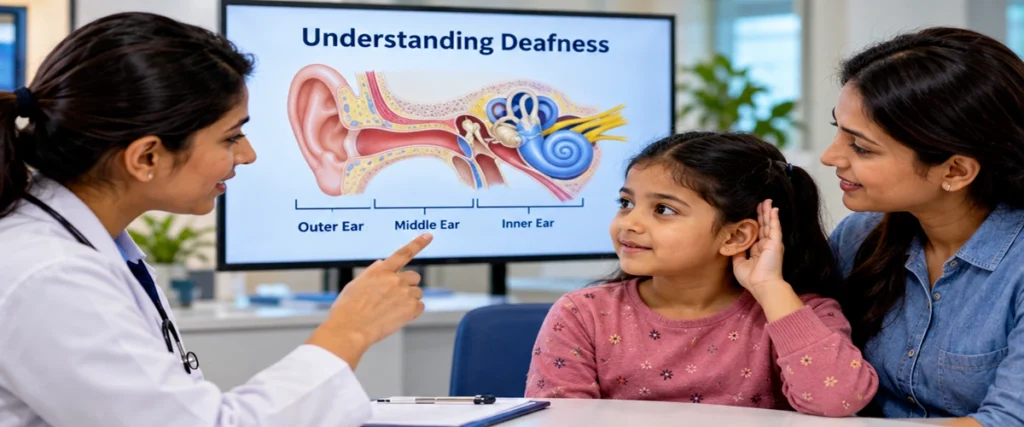
Deafness generally refers to severe or profound hearing loss in which a person has little or no functional hearing. Hearing loss can affect one or both ears and may range from mild to profound.
The World Health Organization (WHO) describes hearing loss according to its severity and notes that people with hearing loss may benefit from technologies such as hearing aids and cochlear implants, as well as communication and rehabilitation services.
It is important to remember that deafness is not the same for every individual. Communication preferences also differ. Some people use spoken language and hearing technology, while others may prefer sign language or a combination of communication methods.
Why Is Early Management of Deafness Important?
Early identification and appropriate intervention can make a significant difference, particularly in babies and young children.
Undetected hearing loss during childhood can affect speech and language development, learning and social participation. In adults, untreated hearing difficulties can interfere with communication, work and daily activities.
WHO emphasizes early identification followed by appropriate intervention and rehabilitation as key components of effective hearing care.
Early management may help a person:
-
Develop or maintain communication skills
-
Participate more effectively in education
-
Communicate with family and colleagues
-
Improve independence
-
Use appropriate hearing technology
-
Reduce social isolation
-
Participate more fully in community life
Causes of Deafness and Hearing Loss
Deafness can have many causes, and the cause may occur before birth, around the time of birth, during childhood or later in life.
Common causes include:
Genetic Causes
Some hearing loss is associated with inherited genetic conditions. A family history of hearing impairment may increase the likelihood of certain forms of hearing loss.
Infections
Certain infections can affect hearing. Chronic middle-ear infections may also contribute to hearing problems.
Birth-Related Factors
Complications around birth, including severe jaundice or lack of oxygen, can be associated with childhood hearing loss.
Noise Exposure
Repeated exposure to loud music, machinery, industrial noise or other high-volume environments can damage the delicate structures of the inner ear.
WHO identifies unsafe listening and occupational noise exposure as important preventable contributors to hearing loss.
Age-Related Hearing Loss
Hearing ability can gradually decline with age. Older adults may have difficulty understanding speech, particularly in noisy environments.
Ototoxic Medicines
Some medicines can damage the structures involved in hearing. Healthcare professionals therefore consider potential ototoxic effects when prescribing and monitoring certain medications.
Types of Hearing Loss
Understanding the type of hearing loss is essential when planning deafness and its management.
Conductive Hearing Loss
Conductive hearing loss occurs when sound cannot travel efficiently through the outer or middle ear.
Possible causes include:
-
Earwax blockage
-
Middle-ear infection
-
Fluid in the middle ear
-
Perforated eardrum
-
Problems involving the middle-ear bones
Depending on the cause, conductive hearing loss may sometimes be treated medically or surgically.
Sensorineural Hearing Loss
Sensorineural hearing loss occurs when there is damage involving the inner ear or auditory nerve pathways.
Common causes include ageing, prolonged noise exposure, certain infections and genetic factors.
This type of hearing loss may be permanent, although hearing technology and rehabilitation can significantly improve communication for many people.
Mixed Hearing Loss
Mixed hearing loss contains both conductive and sensorineural components.
Management depends on identifying and addressing the underlying causes.
How Is Deafness Diagnosed?
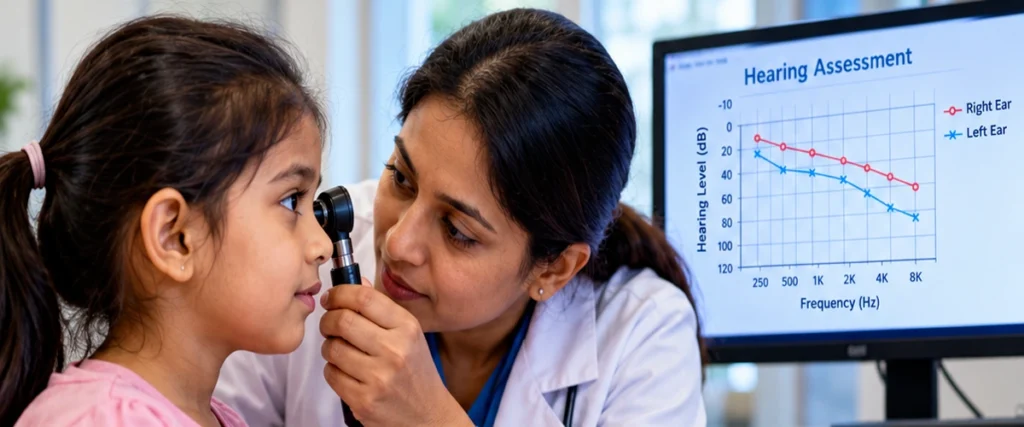
A healthcare professional may begin with a detailed history and examination of the ears. Further assessment is often performed by an audiologist or ENT specialist.
Common hearing assessment methods include:
Pure-Tone Audiometry
Pure-tone audiometry measures the softest sounds a person can hear at different frequencies. The results are commonly displayed on an audiogram.
Speech Audiometry
Speech testing assesses how well a person can hear and understand spoken words.
Tympanometry
Tympanometry helps evaluate the condition and function of the middle ear.
Otoacoustic Emissions
Otoacoustic emissions testing can help assess inner-ear function and is particularly useful in certain screening settings.
Auditory Brainstem Response
Auditory brainstem response testing can assess the hearing pathway from the ear toward the brain and may be useful when conventional behavioural testing is difficult.
The exact tests required depend on the patient’s age, symptoms and clinical situation.
Deafness and Its Management
There is no single treatment that works for every person. Management depends on the cause, severity, age of onset, communication needs and overall health.
1. Medical Treatment
If hearing loss is caused by an ear infection, inflammation, obstruction or another treatable condition, medical management may improve hearing.
For example, treatment may involve medication or management of an underlying ear condition.
Patients should not self-medicate or insert objects into the ear without professional advice.
2. Surgical Treatment
Some conditions causing hearing loss can be treated surgically.
Examples may include procedures for certain middle-ear problems or reconstructive procedures involving the ear.
The appropriate procedure is determined by an ENT specialist after clinical examination and relevant investigations.
3. Hearing Aids
Hearing aids are electronic devices designed to amplify and process sound for people with hearing loss.
Modern hearing aids can be programmed according to an individual’s hearing profile.
However, simply receiving a hearing aid is not always enough. Proper fitting, adjustment, training and follow-up are important for successful use.
WHO identifies hearing aids as an important component of hearing rehabilitation.
4. Cochlear Implants
For selected people with severe or profound sensorineural hearing loss, a cochlear implant may be considered.
Unlike a conventional hearing aid, a cochlear implant works by using an implanted electronic system to stimulate the auditory pathway.
Eligibility requires detailed assessment by an appropriate specialist team.
5. Bone-Conduction and Other Hearing Technologies
Some individuals may benefit from bone-conduction devices or other implantable hearing technologies.
The choice depends on the type of hearing loss and the condition of the ear.
6. Speech and Language Therapy
Speech and language therapy can be an important part of rehabilitation, particularly for children with hearing loss.
Early intervention can support the development of communication and language skills.
7. Sign Language and Alternative Communication
Sign language can provide an effective means of communication for many deaf people.
Communication support may also include speech reading, captioning, communication boards and other assistive technologies.
WHO recognizes sign language, speech and language therapy, captioning and other communication technologies as important components of hearing rehabilitation.
Management of Deafness in Children
Children require particular attention because hearing plays an important role in language and educational development.
Newborn and childhood hearing screening can help identify hearing problems early.
When hearing loss is confirmed, appropriate intervention should begin as soon as possible. Depending on the child’s needs, management may include:
-
Hearing aids
-
Cochlear implant assessment
-
Speech and language therapy
-
Sign language
-
Early educational support
-
Family counselling
-
Assistive listening technology
-
Regular hearing assessment
Early intervention is particularly important because delays in identifying hearing loss can affect communication and educational development.
Management of Deafness in Adults
Adults may develop hearing loss because of ageing, noise exposure, disease, medication or other causes.
Management may include treating an underlying ear condition, hearing aids, cochlear implants in selected cases, communication training and assistive listening technology.
Patients should also be encouraged to protect their remaining hearing by reducing exposure to excessive noise and using appropriate hearing protection.
Benefits of Appropriate Hearing Rehabilitation
Effective hearing rehabilitation aims to help people participate as independently as possible in daily life.
Potential benefits include:
-
Improved communication
-
Better participation in education
-
Greater independence
-
Improved workplace communication
-
Better interaction with family
-
Increased social participation
-
Improved quality of life
Hearing rehabilitation is not limited to technology. WHO describes rehabilitation as a combination of hearing technologies, communication training, therapy, sign language and other support services according to individual needs.
Aftercare and Follow-Up
Management of deafness is often an ongoing process rather than a one-time treatment.
Patients using hearing aids may need periodic adjustments and hearing assessments. Children may require regular monitoring of speech, language and educational progress.
People with cochlear implants require specialist follow-up, programming and rehabilitation.
After treatment or fitting of hearing technology, patients should:
-
Attend scheduled follow-up appointments
-
Use hearing devices as instructed
-
Keep hearing devices clean and maintained
-
Report sudden changes in hearing
-
Protect the ears from excessive noise
-
Follow rehabilitation recommendations
-
Attend speech and language therapy when advised
Sudden hearing loss should receive prompt medical assessment rather than being treated as an ordinary age-related hearing problem.
Nursing Responsibilities in Deafness and Its Management
Nurses play an important role in supporting people with hearing impairment.
Communication With the Patient
Nurses should face the patient while speaking, use clear language and avoid shouting unnecessarily.
The patient’s preferred communication method should be respected.
Patient Education
Nurses can explain the importance of hearing assessment, treatment adherence, hearing-aid use and follow-up appointments.
Environmental Support
Reducing unnecessary background noise can make communication easier.
Written instructions or visual communication may also help.
Hearing-Aid Support
Nurses can reinforce basic education about the correct use, cleaning and safe storage of hearing devices according to professional instructions.
Emotional Support
Hearing loss can lead to frustration, loneliness or social withdrawal. Nurses should provide empathetic support and encourage patients to participate in appropriate rehabilitation and communication programmes.
Family Education
Family members can be taught effective communication strategies, such as facing the person while speaking, maintaining good lighting and reducing background noise.
Prevention of Deafness
Not all hearing loss can be prevented, but many causes are avoidable.
Important preventive measures include:
-
Avoid prolonged exposure to loud sounds
-
Use appropriate hearing protection in noisy workplaces
-
Keep the volume of personal audio devices at safe levels
-
Seek treatment for ear infections
-
Avoid inserting sharp objects into the ear
-
Use medicines responsibly under professional supervision
-
Ensure appropriate childhood immunization
-
Encourage hearing screening when recommended
WHO estimates that many causes of hearing loss can be prevented through public-health measures, safe listening practices, appropriate ear care and timely management of ear conditions.
Deafness and Nursing Education
For nursing students, deafness and its management is an important topic because hearing impairment can affect almost every aspect of patient care.
A nurse may encounter a patient with hearing impairment in a medical ward, surgical unit, community health centre, emergency department, outpatient clinic or long-term care setting.
Students should therefore understand:
-
Basic anatomy of the ear
-
Types and causes of hearing loss
-
Hearing assessment
-
Communication techniques
-
Hearing aids and assistive devices
-
Cochlear implants
-
Rehabilitation
-
Patient and family education
-
Prevention of hearing loss
-
Psychological and social support
At Ideal Institute of Nursing, practical-oriented nursing education and clinical exposure provide an appropriate setting for students to connect theoretical knowledge with patient-centred care. The institute offers both B.Sc Nursing and GNM Nursing programmes and emphasizes clinical learning.
Frequently Asked Questions
What is deafness?
Deafness generally refers to severe or profound hearing loss in which a person has little or no functional hearing. Hearing loss can range from mild to profound and may affect one or both ears.
What are the main causes of deafness?
Causes include genetic factors, infections, birth-related complications, chronic ear disease, excessive noise exposure, ageing and certain medicines that can affect hearing.
Can deafness be treated?
Some causes of hearing loss can be treated medically or surgically. When hearing loss is permanent, rehabilitation may include hearing aids, cochlear implants, assistive technology, speech and language therapy or sign language.
What is the best treatment for deafness?
There is no single best treatment. Management depends on the type, severity and cause of hearing loss, as well as the person’s age, communication needs and overall health.
Can hearing aids restore normal hearing?
Hearing aids do not normally restore normal biological hearing. They amplify and process sounds to improve hearing ability for suitable users.
What is a cochlear implant?
A cochlear implant is an implanted electronic hearing technology that may help selected people with severe or profound sensorineural hearing loss. Suitability is determined through specialist assessment.
Can deafness in children be managed successfully?
Early identification and appropriate intervention can substantially improve communication and developmental opportunities for children with hearing loss. Management may involve hearing technology, speech and language therapy, sign language and educational support.
What is the role of nurses in managing deafness?
Nurses support communication, patient education, hearing-device care, follow-up, family counselling, emotional support and coordination with other healthcare professionals.
Conclusion
Deafness and its management require a person-centred approach that considers not only hearing ability but also communication, education, family relationships, independence and quality of life.
Early identification is especially important for children, while adults can also benefit from timely assessment and rehabilitation. Depending on the underlying cause, management may include medical or surgical treatment, hearing aids, cochlear implants, assistive technologies, speech and language therapy and sign-language support.
For nursing students, understanding hearing impairment is an important part of developing compassionate and effective patient-care skills. A nurse who communicates clearly, recognizes the needs of a person with hearing loss and supports timely referral can make a meaningful difference in that person’s healthcare experience.
Educational note: This article is intended for nursing education and general health awareness. It does not replace examination, diagnosis or treatment by a qualified ENT specialist, audiologist or other healthcare professional.
Recommended External Links
For a health-related article, I would prioritize authoritative sources:
- WHO — Deafness and Hearing Loss: WHO: Deafness and Hearing Loss
- WHO — Primary Ear and Hearing Care: WHO Primary Ear and Hearing Care Training Resources
- Government of India — National Programme for Prevention and Control of Deafness: NPPCD, Government of India
These sources support the article’s discussion of causes, prevention, screening, hearing aids, cochlear implants and rehabilitation.