
The Ultimate Guide to Sterilization and Disinfection Techniques
Have you ever walked into a hospital, a high-tech laboratory, or even a dental clinic and wondered how they keep everything truly safe? In fields like healthcare, biotechnology, and nursing, simply washing something until it looks clean isn’t enough. Microbial threats are invisible, resilient, and everywhere.
To truly protect patients and maintain valid scientific results, professionals rely on two distinct pillars of decontamination: sterilization and disinfection. While people often use these terms interchangeably in everyday conversation, confusing them in a medical or laboratory setting can have serious consequences.
Let’s break down the science, the methods, and the crucial differences you need to know.
Sterilization vs. Disinfection: What’s the Real Difference?
The easiest way to understand the difference is to think of it as an all-out elimination versus a strategic reduction.
Sterilization: This is an absolute state. A process is only considered sterilization if it completely destroys or removes all forms of microbial life. This includes highly resilient bacterial spores, fungi, viruses, and vegetative bacteria. There are no degrees of sterilization; an object is either 100% sterile or it is not.
Disinfection: This process reduces the number of pathogenic (disease-causing) microorganisms on a surface or object to a level that is no longer harmful to health. Crucially, disinfection does not usually kill bacterial spores. It is typically reserved for non-critical surfaces and items.
1. Physical Methods of Sterilization
When we need absolute sterility, physical methods—specifically heat and radiation—are often our first line of defense. They physically destroy the cellular structure or DNA of microorganisms.
Steam Under Pressure (The Autoclave)
Moist heat is one of the most reliable and efficient ways to kill microbes. An autoclave works much like a high-powered pressure cooker. By trapping steam, it raises the boiling point of water, allowing temperatures to reach 121°C (250°F) or higher under pressure.
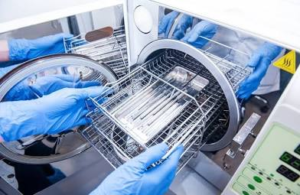
The high-pressure steam quickly penetrates fabrics and containers, denaturing the essential proteins that bacteria and spores need to survive.
Dry Heat Sterilization
What happens when you need to sterilize something that rusts or gets ruined by moisture? That is where dry heat comes in. Using specialized hot air ovens, items like glassware, metal instruments, and powders are subjected to temperatures around 160°C to 180°C for up to two hours.
While it takes longer and requires higher temperatures than an autoclave, it is incredibly effective for moisture-sensitive materials.
2. Chemical Disinfection Techniques
Not everything can handle intense heat. Plastic tubing, electronic monitors, and large environmental surfaces require chemical interventions. Chemical agents are categorized by their strength and how they interact with microbes.
High-Level Disinfectants (HLDs)
These chemicals can destroy all microorganisms, and with extended exposure times, some can even kill bacterial spores—reaching near-sterilization levels. Common examples include:
Glutaraldehyde: Frequently used to clean heat-sensitive medical devices like endoscopes.
Hydrogen Peroxide Vapor: Increasingly popular for deep-cleaning entire hospital rooms.
Low and Intermediate-Level Disinfectants
These are the everyday chemical heroes we see in clinics and households. They kill vegetative bacteria and most viruses but won’t touch tough spores.
Alcohols (Ethyl and Isopropyl): Most effective at a 60%–90% concentration. They work by melting lipid membranes and clotting microbial proteins.
Chlorine Compounds: Think of standard household bleach. It is an excellent, cost-effective choice for wiping down non-porous surfaces and laboratory benches.
Choosing the Right Technique: The Spaulding Classification
To avoid over-processing equipment or putting patients at risk, the medical community relies on the Spaulding Classification system. This framework divides medical devices into three categories based on the risk of infection:
| Category | Definition | Required Treatment | Examples |
| Critical Items | Items that enter sterile tissue or the vascular system. | Sterilization | Surgical scalpels, cardiac catheters, needles. |
| Semi-Critical Items | Items that contact mucous membranes or non-intact skin. | High-Level Disinfection | Endoscopes, respiratory therapy equipment. |
| Non-Critical Items | Items that only come into contact with intact skin. | Low-to-Intermediate Disinfection | Blood pressure cuffs, stethoscopes, bed rails. |
Why Getting This Right Matters
Whether you are studying nursing, working in a medical lab, or managing a healthcare facility, mastering these techniques is a foundational skill. Proper execution prevents the spread of healthcare-associated infections (HAIs), protects workers from biohazards, and ensures that scientific research remains untainted.
By understanding the unique mechanics behind every autoclave cycle and chemical wipe, you are not just following a protocol—you are actively breaking the chain of infection.