
Advanced Cardiac Life Support: A Complete Guide
When a person experiences cardiac arrest or another life-threatening cardiovascular emergency, every second matters. Advanced Cardiac Life Support (ACLS) provides trained healthcare professionals with a structured approach to recognizing and managing these emergencies.
ACLS builds on the foundation of Basic Life Support (BLS) and combines high-quality cardiopulmonary resuscitation (CPR) with advanced assessment, cardiac rhythm recognition, defibrillation, airway and ventilation support, medications, vascular access, coordinated teamwork and post-cardiac-arrest care.
For nursing students, learning Advanced Cardiac Life Support is particularly important because nurses may be among the first healthcare professionals to recognize deterioration and participate in a resuscitation team.
What Is Advanced Cardiac Life Support?
Advanced Cardiac Life Support is a set of advanced clinical interventions used by trained healthcare professionals to manage cardiac arrest, life-threatening arrhythmias, stroke and other serious cardiopulmonary emergencies.
The American Heart Association’s ACLS course is designed for healthcare professionals who participate in the management of cardiac arrest, stroke and other cardiopulmonary emergencies. It emphasizes high-quality CPR, early recognition, time-sensitive intervention and effective team performance.
ACLS is not simply a collection of emergency drugs or procedures. It is a systematic approach in which assessment, CPR, rhythm management, airway support, medications and teamwork work together.
Why Is Advanced Cardiac Life Support Important?
Cardiac arrest can occur suddenly in hospitals, emergency departments, intensive care units, operating rooms and community settings.
During cardiac arrest, the heart can stop producing effective circulation. Without rapid intervention, vital organs are deprived of oxygen.
Advanced Cardiac Life Support aims to help trained teams:
Recognize cardiac arrest quickly
Start high-quality CPR
Identify shockable and non-shockable rhythms
Provide defibrillation when indicated
Support oxygenation and ventilation
Administer appropriate emergency medications
Identify potentially reversible causes
Achieve return of spontaneous circulation (ROSC)
Provide appropriate post-cardiac-arrest care
Work efficiently as a coordinated team
Early intervention and high-quality CPR are fundamental components of successful resuscitation.
Who Needs ACLS Training?
ACLS training is primarily intended for healthcare professionals who may participate in the management of cardiac arrest and other serious cardiovascular emergencies.
This may include:
Nurses
Doctors
Paramedics
Emergency-care professionals
Critical-care professionals
Healthcare professionals working in acute-care settings
The exact training requirement depends on the person’s role, workplace and professional responsibilities.
The American Heart Association currently offers ACLS training through classroom and blended-learning options, with hands-on skills training included as required for course completion.
When Is Advanced Cardiac Life Support Used?
ACLS is relevant to patients experiencing cardiac arrest and other potentially life-threatening cardiovascular conditions.
Important clinical situations include:
Ventricular fibrillation (VF)
Pulseless ventricular tachycardia (pVT)
Asystole
Pulseless electrical activity (PEA)
Severe bradycardia
Unstable tachyarrhythmias
Certain acute coronary syndromes
Stroke and other cardiopulmonary emergencies
The 2025 AHA Adult Advanced Life Support guidelines specifically address cardiac arrest rhythms such as VF, pulseless VT, asystole and PEA, along with peri-arrest cardiovascular conditions.
Basic Life Support vs Advanced Cardiac Life Support
BLS and ACLS are closely connected but have different levels of intervention.
Basic Life Support
BLS focuses on foundational lifesaving measures such as:
Recognizing cardiac arrest
Activating the emergency response system
Starting CPR
Providing high-quality chest compressions
Using an AED when appropriate
Basic ventilation support
Advanced Cardiac Life Support
ACLS builds on BLS by adding advanced interventions such as:
Cardiac rhythm assessment
Manual defibrillation
Advanced airway management
Vascular access
Emergency medications
Cardioversion
Transcutaneous pacing
Post-cardiac-arrest management
High-performance team coordination
A strong ACLS response therefore depends on maintaining high-quality BLS while integrating advanced interventions.
The ACLS Approach to Cardiac Arrest
ACLS follows a structured process rather than relying on isolated interventions.
Step 1: Recognize Cardiac Arrest
The team rapidly assesses the patient and confirms whether cardiac arrest is present.
The emergency response system should be activated immediately, and CPR should begin without unnecessary delay.
Step 2: Start High-Quality CPR
High-quality CPR is central to resuscitation.
Chest compressions help maintain blood flow to vital organs while the team works to identify and treat the underlying cardiac problem.
Interruptions in chest compressions should be minimized.
Step 3: Attach a Monitor or Defibrillator
The cardiac rhythm is assessed to determine whether the arrest rhythm is shockable or non-shockable.
The major shockable rhythms are:
Ventricular fibrillation
Pulseless ventricular tachycardia
The major non-shockable rhythms are:
Asystole
Pulseless electrical activity
Step 4: Defibrillation When Indicated
When VF or pulseless VT is identified, defibrillation is an important component of treatment.
The 2025 AHA guidelines emphasize early defibrillation for cardiac arrest caused by VF or pulseless VT and recommend minimizing interruptions in CPR around shock delivery.
Step 5: Airway and Ventilation Management
The resuscitation team provides appropriate ventilation and oxygenation.
Airway management may range from basic ventilation techniques to advanced airway placement depending on the patient’s condition, available equipment and provider expertise.
Advanced airway management should not unnecessarily interrupt high-quality CPR.
Step 6: Establish Vascular Access
The team may establish intravenous (IV) or intraosseous (IO) access when appropriate so that medications and fluids can be administered according to the clinical situation and current resuscitation protocol.
Step 7: Administer Appropriate Medications
Emergency medications may be used according to the cardiac rhythm and current ACLS algorithm.
Medication selection, dosage and timing must follow the current approved protocol and should be performed by appropriately trained healthcare professionals.
Step 8: Identify Reversible Causes
The team should consider potentially reversible causes of cardiac arrest.
A commonly taught framework includes the Hs and Ts, which may include:
Hs
Hypovolemia
Hypoxia
Hydrogen ion excess (acidosis)
Hypo-/hyperkalemia
Hypothermia
Ts
Tension pneumothorax
Cardiac tamponade
Toxins
Pulmonary thrombosis
Coronary thrombosis
The clinical team uses patient history, examination, monitoring and appropriate investigations to identify the likely cause.
Shockable and Non-Shockable Rhythms
Understanding cardiac rhythms is one of the most important parts of Advanced Cardiac Life Support.
Shockable Rhythms
Ventricular fibrillation and pulseless ventricular tachycardia are shockable cardiac arrest rhythms.
Defibrillation is used when indicated, combined with CPR and other interventions.
Non-Shockable Rhythms
Asystole and pulseless electrical activity are not treated with defibrillation.
The focus is on high-quality CPR, appropriate medications according to the current algorithm and identifying and treating reversible causes.
Advanced Airway Management
Airway management is an important component of ACLS.
Depending on the patient’s condition, the resuscitation team may use:
Bag-valve-mask ventilation
Supraglottic airway devices
Endotracheal intubation
Oxygen therapy
Capnography when available and appropriate
Advanced airway placement requires appropriate training and should be performed by qualified personnel.
The AHA’s 2025 Adult Advanced Life Support guidance includes advanced airway management among the major interventions used during adult cardiac arrest.
Medications in ACLS
Medications are used as part of a structured resuscitation algorithm rather than independently.
Depending on the clinical situation and current protocol, ACLS medication management may involve drugs such as epinephrine and antiarrhythmic medications.
Because drug recommendations can change as resuscitation guidelines are updated, healthcare professionals should always follow the latest authorized ACLS protocol and institutional policy rather than relying on an old textbook or internet summary.
Cardioversion and Transcutaneous Pacing
ACLS is not limited to cardiac arrest.
Cardioversion
Synchronized electrical cardioversion may be used for selected unstable tachyarrhythmias with a pulse.
The procedure is different from unsynchronized defibrillation used for certain cardiac arrest rhythms.
Transcutaneous Pacing
Transcutaneous pacing can be used in selected patients with clinically significant bradycardia when indicated.
It is an emergency intervention that requires appropriate patient assessment and monitoring.
Post-Cardiac-Arrest Care
Achieving return of spontaneous circulation is an important milestone, but resuscitation does not end when the pulse returns.
Post-cardiac-arrest care focuses on stabilizing the patient and reducing the risk of further injury.
Care may include:
Airway and ventilation management
Oxygenation and hemodynamic support
Continuous monitoring
Identification and treatment of the cause
Neurological assessment
Appropriate diagnostic investigations
Temperature management when indicated
Ongoing critical care
The AHA includes a dedicated adult post-cardiac-arrest care algorithm as part of its current resuscitation algorithms.
High-Performance Teams in ACLS
A cardiac arrest is rarely managed effectively by one person working alone.
ACLS emphasizes teamwork because several interventions may need to happen simultaneously.
A high-performance resuscitation team may include members responsible for:
Team leadership
Chest compressions
Airway and ventilation
Defibrillation
Medication preparation and administration
Monitoring and rhythm interpretation
Documentation
Communication
Clear role assignment can reduce confusion and improve coordination during an emergency.
The AHA’s current ACLS course specifically emphasizes high-performance teams and team dynamics.
Essential Equipment for ACLS
An emergency resuscitation area should have appropriate equipment readily available.
Depending on the clinical setting, equipment may include:
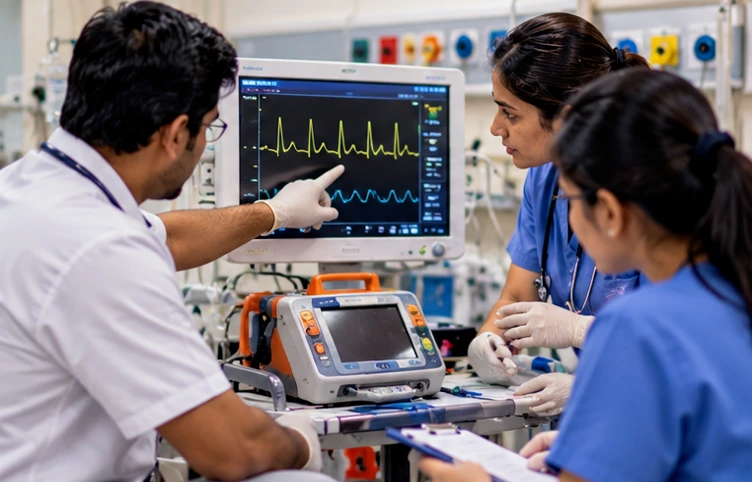
Defibrillator
Cardiac monitor
Bag-valve-mask device
Oxygen supply
Suction equipment
Airway adjuncts
Advanced airway equipment
IV/IO access equipment
Emergency medications
ECG equipment
Capnography equipment when available
Personal protective equipment
Equipment must be checked regularly according to institutional policy.
Nursing Responsibilities in Advanced Cardiac Life Support
Nurses are often essential members of a resuscitation team.
Rapid Assessment
Nurses may identify deterioration quickly and activate the emergency response system according to institutional procedures.
High-Quality CPR
When appropriately trained and assigned, nurses participate in chest compressions and other BLS measures.
Monitoring
Nurses monitor cardiac rhythm, vital signs, oxygenation and other physiological parameters.
Medication Administration
Under appropriate orders and protocols, nurses may prepare and administer emergency medications while carefully monitoring their effects.
Defibrillation Support
Nurses may assist with defibrillator preparation, rhythm assessment and safe delivery of shocks according to their training and institutional responsibilities.
Airway Support
Nurses may assist with ventilation and advanced airway procedures and monitor airway equipment.
Documentation
Accurate documentation of important events, interventions, medications, rhythms and patient responses is essential.
Team Communication
Clear communication helps ensure that interventions are coordinated and that important clinical information reaches the team leader.
Benefits of Advanced Cardiac Life Support Training
Appropriate ACLS training can help healthcare professionals develop confidence and competence in managing serious cardiovascular emergencies.
Potential benefits include:
Improved recognition of cardiac emergencies
Better understanding of resuscitation algorithms
Improved rhythm recognition
Greater familiarity with emergency equipment
Better teamwork and communication
Improved response to cardiac arrest
Greater preparedness for critical-care situations
The AHA states that its ACLS course is designed to improve outcomes through early recognition and time-sensitive interventions delivered by high-performance teams.
ACLS Training and Simulation-Based Learning
Learning ACLS from a textbook alone is not enough.
Healthcare professionals need opportunities to practise clinical decision-making and teamwork in realistic situations.
Simulation training can allow students to practise:
CPR
Rhythm recognition
Defibrillator operation
Airway support
Emergency communication
Team roles
Clinical decision-making
Post-resuscitation care
Simulation also provides an opportunity for debriefing, allowing students to identify strengths and areas for improvement.
ACLS for Nursing Students
For nursing students, Advanced Cardiac Life Support connects theoretical knowledge with emergency clinical practice.
Students should understand:
Cardiovascular anatomy and physiology
Cardiac rhythms
BLS and CPR
Defibrillation
Airway management
Emergency medications
IV/IO access concepts
Reversible causes of cardiac arrest
Post-cardiac-arrest care
Documentation
Team communication
At Ideal Institute of Nursing, students have access to practical nursing education and simulated clinical learning. The institute’s Nursing Foundation Lab provides a hands-on environment where B.Sc Nursing and GNM students practise clinical skills before entering real hospital settings.
The institute also states that students receive clinical exposure through associated healthcare settings, making emergency-care knowledge relevant to their broader clinical preparation.
ACLS Certification and Course Learning
ACLS certification is generally intended for healthcare professionals whose roles require participation in managing cardiopulmonary emergencies.
The American Heart Association’s current ACLS course includes classroom and blended-learning options. Successful completion of the required course components leads to an ACLS Course Completion Card, which the AHA states is valid for two years.
Students and professionals should confirm the certification requirements of their employer, institution or professional body before selecting a course.
Aftercare and Continuing Education
Resuscitation knowledge can decline without regular practice.
Healthcare professionals should therefore:
Review current ACLS algorithms
Participate in simulation practice
Maintain CPR competency
Attend refresher training when required
Review institutional emergency protocols
Practise team communication
Keep up with guideline updates
The AHA’s ACLS materials are periodically updated as new resuscitation science becomes available. The AHA published updates to ACLS course materials in 2026, demonstrating why healthcare professionals should use current training materials rather than outdated algorithms.
Frequently Asked Questions
What is Advanced Cardiac Life Support?
Advanced Cardiac Life Support (ACLS) is a structured approach used by trained healthcare professionals to manage cardiac arrest, serious arrhythmias and other life-threatening cardiopulmonary emergencies.
What is the difference between BLS and ACLS?
BLS focuses on foundational resuscitation measures such as CPR and AED use. ACLS builds on BLS by adding advanced rhythm management, defibrillation, airway management, medications, cardioversion, pacing, post-cardiac-arrest care and coordinated team-based interventions.
Who should learn ACLS?
ACLS is designed primarily for healthcare professionals who direct or participate in managing cardiac arrest, stroke and other cardiopulmonary emergencies, including nurses, physicians and paramedics.
What are the shockable rhythms in ACLS?
The major shockable cardiac arrest rhythms are ventricular fibrillation (VF) and pulseless ventricular tachycardia (pVT).
What are the non-shockable rhythms?
The major non-shockable cardiac arrest rhythms are asystole and pulseless electrical activity (PEA).
Why is high-quality CPR important in ACLS?
High-quality CPR helps maintain circulation to vital organs during cardiac arrest and is a fundamental part of resuscitation while the team identifies and treats the underlying cause.
What is the role of nurses in ACLS?
Nurses may participate in rapid assessment, CPR, monitoring, medication administration, airway support, defibrillation support, documentation, communication and other resuscitation responsibilities according to their training and institutional protocols.
Is ACLS only used during cardiac arrest?
No. ACLS also addresses serious cardiovascular emergencies such as symptomatic bradycardia, unstable tachyarrhythmias, stroke and acute coronary syndromes.
How often should ACLS knowledge be updated?
Healthcare professionals should follow the certification and renewal requirements of their training organization and employer and should use the latest approved resuscitation guidelines and institutional protocols.
Conclusion
Advanced Cardiac Life Support is an important component of emergency cardiovascular care. It combines high-quality CPR with rhythm recognition, defibrillation, airway and ventilation management, medications, treatment of reversible causes, coordinated teamwork and post-cardiac-arrest care.
For nursing students, ACLS provides an important bridge between classroom theory and real-world emergency practice. Understanding the principles of resuscitation helps future nurses recognize deterioration, respond systematically and contribute effectively to a multidisciplinary emergency team.
At the same time, ACLS algorithms should never be learned as static information. Resuscitation science evolves, and healthcare professionals should use current guidelines, authorized training materials and institutional protocols.
For nursing education, regular simulation, hands-on practice, teamwork and structured debriefing can help students develop the confidence and clinical judgement required during critical situations.
Educational note: This article is intended for nursing education and general awareness. ACLS interventions, medication doses and clinical decisions must be performed only by appropriately trained healthcare professionals using current approved guidelines and local institutional protocols.
Recommended External Links
For this particular article, I strongly recommend authoritative American Heart Association references:
- AHA ACLS Course — current ACLS course information and training structure. cpr.heart.org
- AHA Adult Advanced Life Support Guidelines — authoritative source for adult ACLS clinical recommendations. cpr.heart.org
- AHA 2025 Resuscitation Algorithms — useful for readers looking for official algorithms. cpr.heart.org
- AHA ACLS Course Options — useful for readers researching ACLS training options and certification.