
Eye Donation and Eye Banking: A Complete Guide
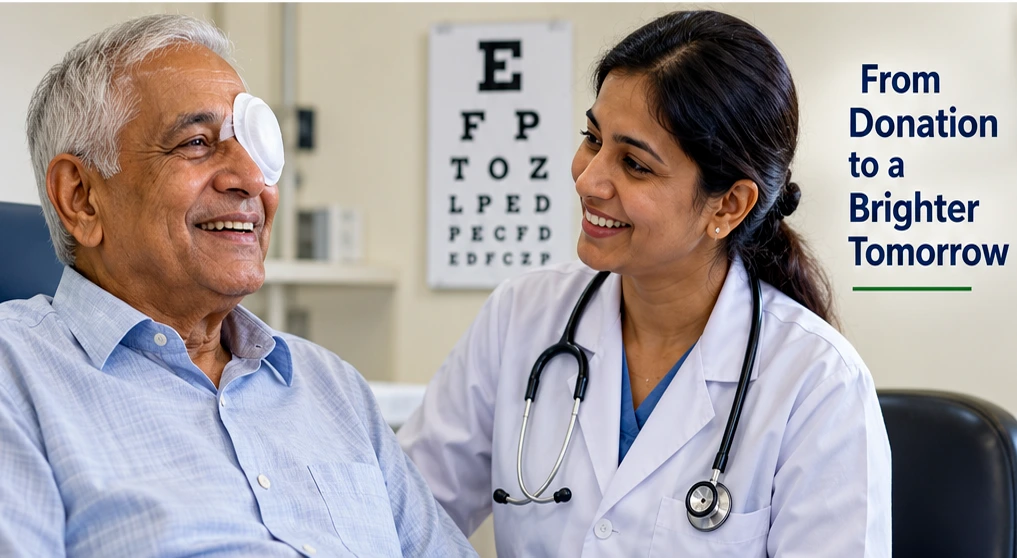
Imagine a simple decision made during a difficult moment that could help restore someone’s vision. Eye donation and eye banking play an important role in helping people with certain forms of corneal blindness receive the opportunity for improved sight through corneal transplantation.
For nursing students and healthcare professionals, understanding eye donation is more than learning a medical procedure. It involves communication with families, ethical considerations, timely coordination with an eye bank, infection prevention, documentation, and compassionate patient and family care.
In India, eye banks and eye retrieval centres form an important part of the corneal transplantation system. The National Organ and Tissue Transplant Organisation (NOTTO) describes eye banks as organizations involved in harvesting, processing, preserving, evaluating and providing corneal tissue for transplantation.
What Is Eye Donation?
Eye donation is the voluntary donation of eyes or corneal tissue after a person’s death so that suitable tissue can be evaluated and potentially used for transplantation or other approved purposes.
The cornea is the transparent front portion of the eye that allows light to enter and helps focus vision. Damage or disease affecting the cornea can cause significant visual impairment. In selected patients, corneal transplantation may help restore useful vision.
One important point is that eye donation is not the same as donating the entire eye for direct transplantation. In routine corneal transplantation, suitable corneal tissue is retrieved, evaluated and prepared by an authorized eye bank before being provided to an ophthalmic surgeon.
Why Is Eye Donation Important?
Corneal blindness can have a major effect on education, employment, independence and quality of life. Eye donation helps create a source of donated corneal tissue for patients who may benefit from transplantation.
The Government of India’s National Programme for Control of Blindness and Visual Impairment (NPCBVI) includes corneal blindness among the conditions addressed through eye-care services and promotes awareness activities related to eye donation.
Eye donation is therefore not simply a personal charitable act. It is also an important part of a broader healthcare system involving donor families, eye retrieval teams, eye banks, ophthalmologists, nurses and transplant services.
Who Can Donate Eyes?
Many people can potentially become eye donors, but final suitability is determined by the authorized eye bank or medical team after death.
Age alone does not automatically exclude someone from eye donation. Medical history and the circumstances surrounding death are considered when determining whether donated tissue is suitable.
Some medical conditions may prevent donation because of the risk of transmitting infection or because the tissue may not be appropriate for transplantation. Therefore, families should not make the final decision about suitability themselves. The eye bank team performs the necessary assessment.
How Does Eye Donation Work?
The process needs to begin quickly after death because corneal tissue has a limited period in which it can be retrieved and appropriately preserved.
Step 1: Inform the Eye Bank
After a person’s death, the family should contact a nearby authorized eye bank or eye retrieval centre as soon as possible.
In India, NOTTO guidance states that cornea donation can be performed within approximately 6–8 hours after death. Families should therefore contact the eye bank without unnecessary delay.
Step 2: Medical Assessment
The retrieval team collects relevant information about the deceased person’s medical history and circumstances of death.
The team assesses whether donation is appropriate and checks for contraindications.
Step 3: Corneal Tissue Retrieval
A trained and authorized team performs the retrieval using appropriate sterile techniques.
The procedure is carried out respectfully and is designed to minimize changes to the donor’s appearance.
Step 4: Testing and Evaluation
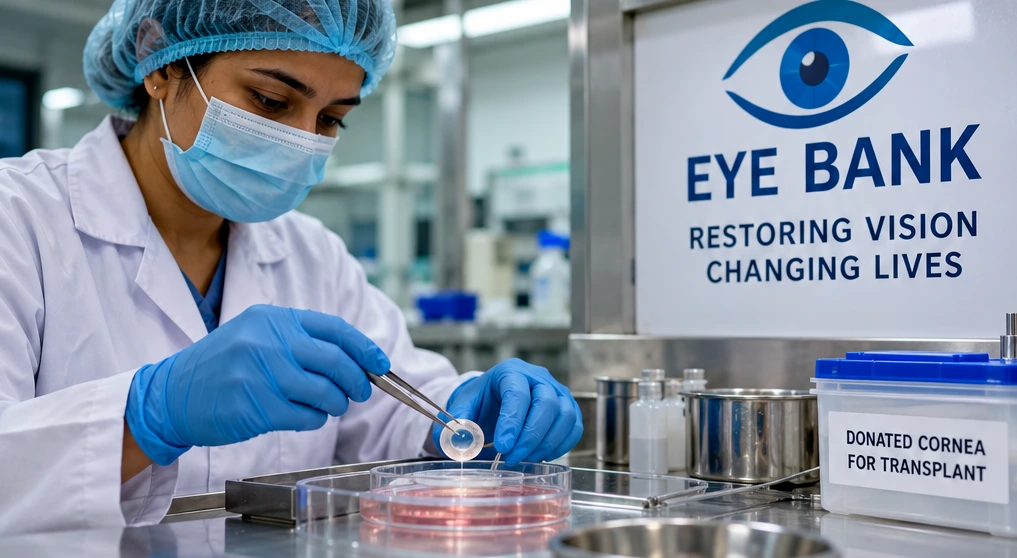
The donated tissue is transported to the eye bank, where it can undergo processing, preservation and evaluation.
Relevant donor blood and tissue screening may be performed according to applicable protocols to help ensure safety.
Step 5: Preservation and Storage
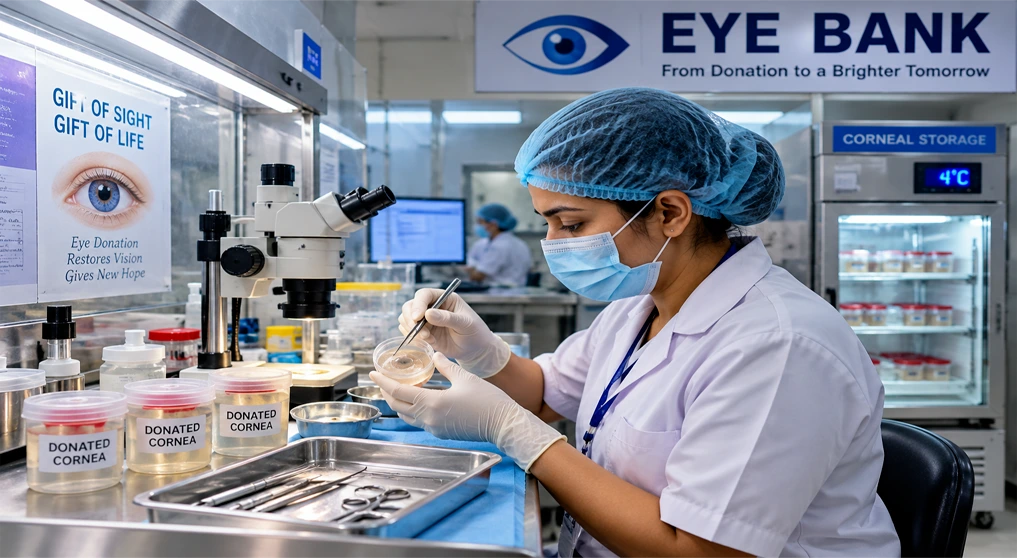
Suitable corneal tissue is preserved under controlled conditions until it is required for transplantation.
Eye banks have specialized facilities, equipment, trained personnel and quality-control procedures for handling donated tissue.
Step 6: Allocation for Transplantation
When appropriate tissue is available, it can be supplied to a qualified corneal transplant surgeon for a suitable recipient.
The final decision about transplantation depends on the patient’s clinical condition and the ophthalmologist’s assessment.
What Is Eye Banking?
Eye banking is the organized system through which donated ocular tissue is retrieved, processed, preserved, evaluated and made available for appropriate clinical use.
According to NOTTO’s transplant manual, India’s eye-banking system includes eye retrieval centres, eye banks and eye-bank training centres.
An eye bank therefore does much more than simply store donated tissue. It supports donor coordination, tissue retrieval, laboratory testing, preservation, evaluation, documentation, quality control and distribution.
What Happens Inside an Eye Bank?
An eye bank typically performs several important activities:
Donor registration and coordination
Communication with donor families
Tissue retrieval
Collection of required donor samples
Medical and laboratory screening
Corneal tissue preservation
Tissue evaluation
Record keeping and documentation
Quality assurance
Coordination with transplant centres
Training and professional education
These activities require trained healthcare personnel and strict adherence to established protocols.
Types of Corneal Transplantation
Corneal transplantation is not necessarily the same procedure for every patient. Depending on the condition affecting the cornea, ophthalmic surgeons may perform different forms of corneal transplantation.
Penetrating Keratoplasty
Penetrating keratoplasty involves replacing the full thickness of the diseased cornea with donor corneal tissue.
Lamellar Keratoplasty
In lamellar procedures, only the affected layers of the cornea are replaced while healthier layers may be preserved.
The exact surgical approach depends on the patient’s diagnosis, corneal condition and specialist assessment.
Benefits of Eye Donation and Eye Banking
The major potential benefit of eye donation is that donated corneal tissue can provide an opportunity for corneal transplantation in appropriate patients.
The broader benefits include:
Supporting restoration of useful vision
Helping people affected by corneal disease
Improving independence and quality of life
Increasing availability of donor corneal tissue
Supporting ophthalmic transplantation services
Promoting awareness about preventable and treatable visual impairment
However, eye donation does not guarantee that every donated cornea will be suitable for transplantation. Tissue suitability is determined through professional assessment and established screening procedures.
Is Eye Donation Painful for the Donor?
No. Eye donation takes place after death, so the deceased person does not experience pain from the retrieval procedure.
The retrieval is performed by trained personnel using appropriate techniques. Families can also discuss their concerns with the eye bank team before making arrangements.
Can the Family Still Have Funeral or Religious Ceremonies?
In most situations, eye donation can be coordinated without preventing families from proceeding with normal funeral arrangements.
The retrieval team works to complete the process promptly and respectfully. Families should communicate their timing requirements and cultural or religious concerns to the eye bank team.
Nursing Responsibilities in Eye Donation and Eye Banking
Nurses can play an important role in supporting eye donation services.
1. Patient and Family Communication
Nurses may help provide clear, sensitive information to families about the possibility of eye donation.
Communication should be respectful and free from pressure.
2. Early Identification of Potential Donors
In hospital settings, nurses may help identify situations in which donation can be considered and inform the appropriate team according to institutional policy.
3. Coordination With the Eye Bank
Timely communication is important because corneal tissue retrieval has a limited time window.
4. Infection Prevention
Nurses should follow standard precautions and infection-control procedures when caring for deceased patients and supporting tissue retrieval processes.
5. Documentation
Accurate documentation is essential. Relevant information may include the time of death, donor identification details, family communication, consent-related information and coordination with the eye bank.
6. Emotional Support
Families may be experiencing grief and emotional distress. Nurses should communicate with empathy and allow families time to understand the process.
This aspect of nursing care demonstrates why clinical knowledge and compassionate communication must work together.
What Should Families Do After Death if They Want to Donate Eyes?
If a family wishes to donate the eyes of a deceased relative, they should contact an authorized eye bank or eye retrieval centre as soon as possible.
While waiting for the retrieval team, the family should follow the instructions provided by the healthcare facility or eye bank. The team may provide specific guidance regarding positioning, room conditions and other practical steps.
Families should not attempt to perform any retrieval procedure themselves.
Eye Donation and Nursing Education
For nursing students, eye donation and eye banking provide an excellent example of how clinical practice, ethics, communication and public health work together.
Students can learn about:
Corneal anatomy and physiology
Corneal blindness
Organ and tissue donation
Eye-bank procedures
Infection prevention
Ethical principles
Family counselling
Documentation
Community awareness
Nursing responsibilities in transplantation services
Understanding these concepts can help nursing students become more confident healthcare professionals who can educate patients and families about important health-related decisions.
Common Myths About Eye Donation
Myth 1: Only young people can donate their eyes.
Fact: Age by itself does not determine whether donated tissue is suitable. The eye bank evaluates each potential donor individually.
Myth 2: The entire eye is transplanted into another person.
Fact: Corneal tissue is commonly used for transplantation. The donated tissue is processed and evaluated by an authorized eye bank before clinical use.
Myth 3: Eye donation prevents normal funeral arrangements.
Fact: Retrieval is coordinated promptly and respectfully, and families can discuss funeral timing and cultural concerns with the eye bank team.
Myth 4: Every donated cornea will definitely be transplanted.
Fact: Donated tissue must meet appropriate medical and quality requirements. Not every donation will necessarily be suitable for transplantation.
Frequently Asked Questions About Eye Donation and Eye Banking
What is eye donation?
Eye donation is the voluntary donation of ocular tissue after death so that suitable tissue may be evaluated and potentially used for corneal transplantation or other approved purposes.
What is an eye bank?
An eye bank is an organization that coordinates the retrieval, processing, preservation, evaluation and distribution of donated corneal tissue for appropriate clinical use.
How soon should an eye bank be contacted after death?
The eye bank should be contacted as soon as possible. NOTTO guidance states that cornea donation can generally be performed within approximately 6–8 hours after death, subject to appropriate assessment and procedures.
Can elderly people donate their eyes?
Potential donors are assessed individually. Age alone does not necessarily determine suitability, so families should contact an authorized eye bank for assessment.
Is eye donation painful?
No. Eye donation occurs after death, so the deceased person does not experience pain during tissue retrieval.
Can eye donation help restore someone’s vision?
Suitable donated corneal tissue may be used for corneal transplantation in patients who are appropriate candidates. The potential benefit depends on the recipient’s condition and the clinical assessment by an ophthalmologist.
What is the role of nurses in eye donation?
Nurses may support family communication, identify potential donors, coordinate with the eye bank, maintain infection-control practices, document relevant information and provide compassionate support to families.
Conclusion
Eye donation and eye banking represent an important connection between community participation and modern ophthalmic healthcare. A voluntary decision to donate after death can provide suitable corneal tissue for transplantation and may help improve vision for another person.
For nursing students, learning about eye donation goes beyond understanding the retrieval process. It develops knowledge of corneal health, ethical practice, family counselling, infection prevention, documentation and multidisciplinary healthcare.
Awareness is one of the most important steps. Families who wish to donate should contact an authorized eye bank or eye retrieval centre promptly after death and follow professional guidance throughout the process.
At Ideal Institute of Nursing, topics such as eye donation, transplantation and patient-centred care can help nursing students connect classroom learning with real-world healthcare practice.
Educational note: This article is intended for nursing education and public awareness. Actual donor suitability, tissue retrieval, preservation and transplantation decisions must be handled by authorized healthcare professionals and eye-bank services.
IIN Kalyani
- “nursing students” / “B.Sc Nursing” → B.Sc Nursing at Ideal Institute of Nursing
- “GNM Nursing” → GNM Nursing at Ideal Institute of Nursing
- “clinical exposure” / “nursing education” → About Ideal Institute of Nursing
- “infection prevention” → Infection Control and PPE Use in Nursing
- “nursing education and practical learning” → AV-Aids Lab at IIN Kalyani
- “contact the institute” → Contact Ideal Institute of Nursing
- Government of India’s NPCBVI: National Programme for Control of Blindness and Visual Impairment — useful for the section discussing India’s national eye-care programme and corneal blindness.
- NOTTO Eye Banking & Corneal Transplantation Manual: NOTTO Eye Banking and Corneal Transplantation Manual — particularly useful for the eye-bank structure and donation process.
- AIIMS National Eye Bank: AIIMS National Eye Bank — useful for readers looking for an established Indian eye-bank resource.